
Why a Good Demo Is Not Enough for Real-World Weapons Detection
Investing in a weapons detection system is a significant decision. The solution you choose will shape how people enter your facility, how your security team operates, and how screening functions day after day.
During the evaluation process, one question naturally rises to the top: Can the system reliably detect threats?
Detection performance is an important consideration, but organizations often evaluate several factors at the same time, including staffing requirements, operational workflows, entry throughput, and the overall experience for people moving through the entrance.
A system can perform well during a controlled demonstration but operate very differently in a busy, real-world environment filled with people, personal belongings, time pressure, and constant movement.
That’s one reason many organizations choose to conduct a pilot before making a long-term investment.
What Demos Can Tell You
A demonstration shows a system’s detection capabilities in a controlled setting.
During a typical demo:
- People often pass through one at a time
- Alerts are easy to observe and discuss
- The pace is steady and predictable
- Conditions are carefully managed
These settings make it easier to evaluate detection performance and understand how the technology works. This step is a necessary step in getting a basic introduction and should not be skipped over. However, this step does not reflect the full reality of a screening operation on a daily basis.
Detection is the first step, next is operation.
What Happens During Daily Operations
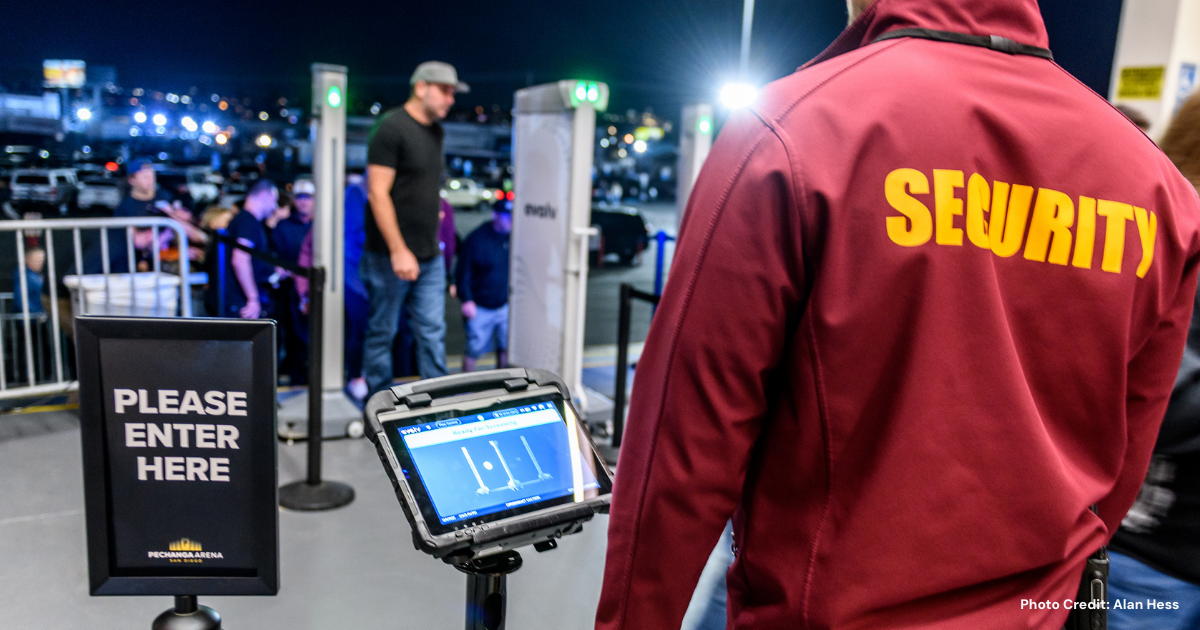
The environment at a busy entrance looks very different than a controlled demo.
People arrive in groups, bringing backpacks, laptops, water bottles, keys, and other personal items. Security staff need to interpret alerts quickly while keeping people moving.
Questions that become important during day-to-day operations include:
- How easily can staff understand and respond to alerts?
- How does the system fit into and connect with existing security procedures?
- How does screening perform during peak arrival periods?
- Can staff maintain a consistent pace of entry while resolving alarms?
- What is the experience like for visitors, employees, and guests entering the facility?
Operational performance becomes a major part of the evaluation because small delays or uncertainties can affect the flow of everyone entering the building.
What a Pilot Helps You Learn
A pilot allows you to see how the technology performs under actual operating conditions with your staff, your traffic patterns, and your facility layout.
Many organizations use pilots to answer practical questions such as:
- How does the system fit into our daily workflow?
- How do staff and visitors interact with the technology over time?
- Can alerts be managed efficiently during busy entry periods?
- Does the system provide information that supports consistent decision-making?
- How does screening impact the overall entry experience?
These insights are often difficult to gather during a short demonstration.
Every Environment Has Unique Conditions
Physical and environmental factors can also influence screening operations. Some facilities operate outdoors, where weather conditions may impact daily use. Others screen large numbers of people indoors throughout the day. Entrance layouts, staffing models, nearby equipment, and traffic patterns can all affect how a screening program functions.
A pilot provides an opportunity to observe how the technology performs within your specific real-world conditions and identify operational considerations before full deployment.
A More Complete Evaluation
A pilot extends the evaluation beyond a single demonstration and allows organizations to observe performance over time. By seeing the technology in action during normal operations, organizations gain a clearer understanding of how detection, staffing, workflows, and entry flow come together in practice. That broader perspective can help support a more informed investment decision.

Senior Director - Strategic Sales
Zack brings extensive experience across physical security, defense, and complex operational environments. His career spans military service, defense and industrial operations, and work with Fortune 500 organizations, providing a unique perspective on security in high-profile locations and large-scale commercial spaces. Today, he helps organizations develop practical weapons screening and security strategies that balance risk, operational efficiency, and the customer experience.


