
What is the Impact of Using AI in Weapons Detection?
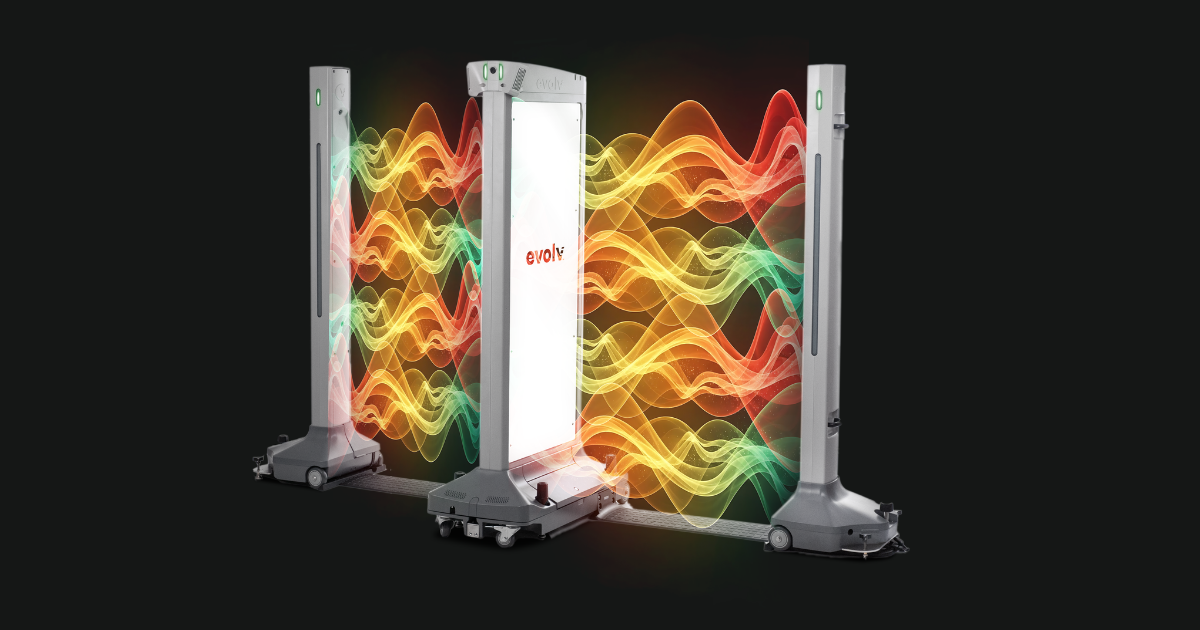
Before exploring how AI is transforming weapons detection, it’s important to understand the traditional technology that has served as the foundation of security screening for decades: metal detectors.
How Do Metal Detectors Work?
Metal detection has been around for nearly a century. At its core, at a high level, it works by measuring how much metal passes through it. If that amount crosses a certain threshold, it alerts. Different systems are tuned to different thresholds, but the principle stays the same, it’s all about quantity.
This becomes a challenge in real world conditions, where every day items can tip the metal detector past the threshold without the presence of a dangerous item.
Real-World Conditions in Screening Environments
Now add everyday items to the scenario:
- Bag with zippers
- Belt
- Phone
- Keys
- Coins
- Tablet
- Headphones
This is how people actually show up. When someone walks through a metal detector with all of that, the system adds everything together. If the total amount of metal is too high, it alerts. It’s reacting to the sum.
That creates a challenge. Every alert becomes a broad message that there’s metal somewhere, maybe even in a general area, but does not give much clarity beyond that.
How Does AI-Based Weapons Detection Work?
AI-based detection takes a different approach. It still senses metal, but it goes further by analyzing it:
- What is the likely shape?
- What could it be made of?
- Where is it located on the body?
- Who was carrying it?
AI-based weapon detection combines advanced sensors with machine learning to analyze people as they move through a screening system. Trained on real-world data, the technology learns to tell the difference between potential weapons and many common everyday items, helping reduce unnecessary alarms while identifying possible threats.
Go back to that same person carrying everyday items scattered on their body. An AI system is built to recognize that those objects don’t match the characteristics of a weapon and allow them through without interruption.
Add a weapon into that mix, and the system responds differently. It alerts, and on some systems, it even illustrates where the potential threat is located. These insights on threat location change how the screening process works. Instead of a general alert that requires a full search, staff have direction. They see who to stop and where to focus. The interaction becomes fast, consistent, and easy to manage, especially when people are moving through quickly.
Technology Trade-Offs
Traditional metal detection still plays an important role in physical security. It’s a proven technology and continues to be widely used. But it does come with limitations in modern, high-throughput environments where people carry a wide range of everyday items.
If your goal is to move people through efficiently while maintaining a strong level of security, that added detection capability from AI in weapons detection can make a meaningful difference in how your operation runs day to day.


Chief of Engineering
Owais Hassan, Chief of Engineering at Evolv Technologies, leads global R&D to drive innovations in AI-powered security technology. As an Executive Leadership Team member, he spearheads engineering and product development to advance Evolv's leadership in weapons detection and intelligent security screening. With over 25 years of experience, Owais has built high-capacity Internet switches, Optical and Wireless networks, and Real-time distributed systems at Ericsson, General Dynamics, Sycamore Networks, and others. He fosters world-class R&D teams, balancing quality, value, and innovation to deliver safe, seamless security solutions. Owais holds an advanced degree in Electrical and Computer Engineering from West Virginia University.


