
What Arizona Schools Need to Know About HB2074: How Layered Security Supports Compliance

Arizona’s House Bill 2074 (HB2074) became law in May 2025. It is the biggest update to the state’s school safety program in more than ten years. The law adds new training rules, updates safety planning, and gives districts more ways to use state safety grant money. This is especially helpful when schools cannot hire a School Resource Officer (SRO).
Key Requirements of HB2074
1. More Options for School Safety Officers
Schools can now hire retired police officers and other certified law enforcement professionals to work as school safety officers. This helps fill staffing gaps.
2. Required Officer Training
All officers on campus must receive training in:
- Working with students with disabilities
- Civil rights
- Student privacy laws
- Adolescent mental health
The law specifically requires disability‑related training, and state agencies confirm the additional topics.
3. Emergency Response Plans
Every school must prepare and submit an emergency response plan tailored to its campus.
4. Regular Safety Assessments
Districts must complete recurring safety assessments to keep plans and procedures up to date.
5. Blueprint Sharing and Protection
Schools must share floor plans with law enforcement and emergency responders. These documents are now protected and cannot be released through public records requests.
6. Flexible Use of Safety Grants
Districts may now use state safety grants for:
- Safety technology
- Safety training
- Infrastructure improvements
This flexibility helps schools strengthen security even when hiring an SRO is not possible.
How Layered Security Supports HB2074
HB2074 encourages schools to focus on prevention, preparedness, and fast response. A layered security approach supports these goals by combining people, policies, and technology.
Strengthening Entry Points
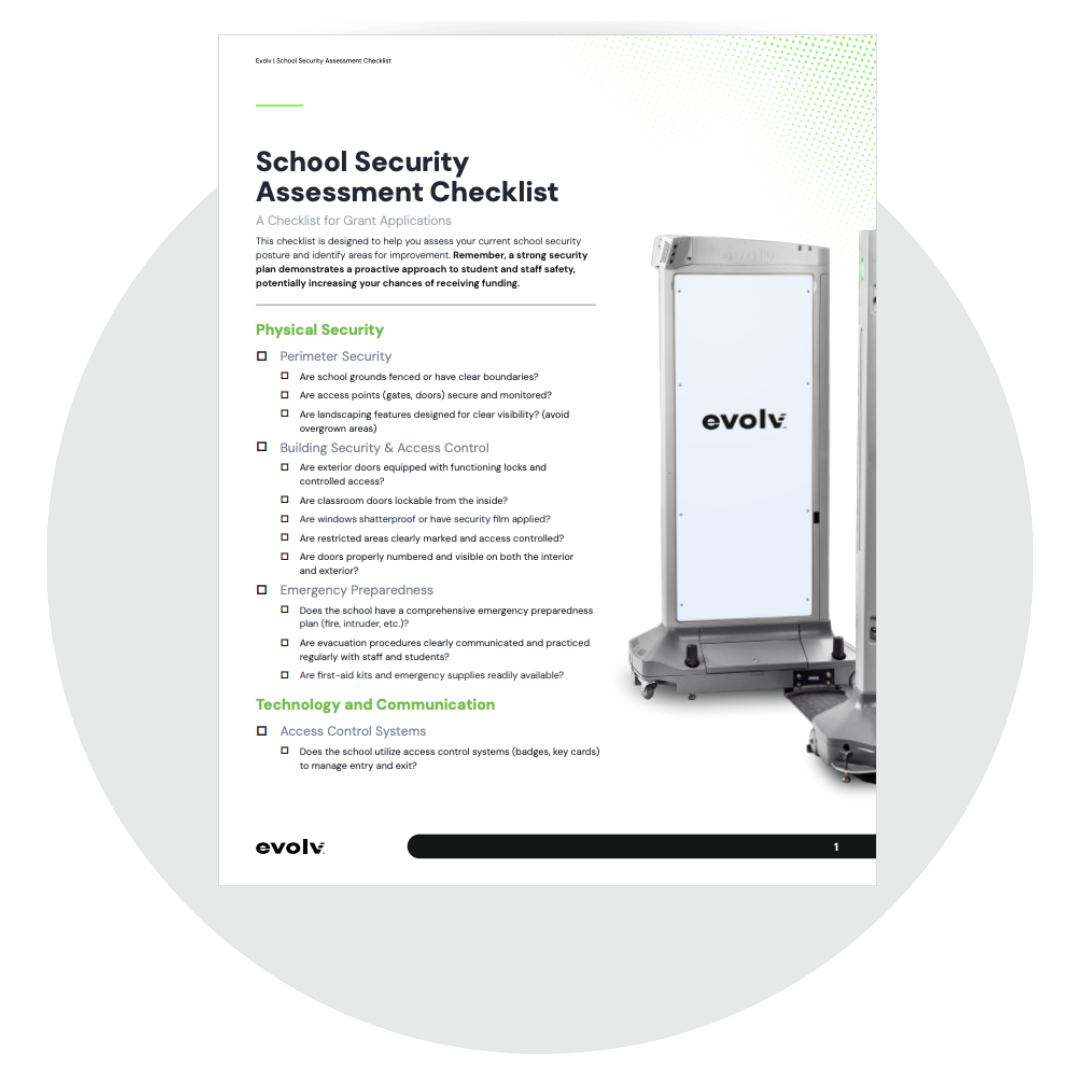
Modern weapons detection systems, like Evolv Express® and Evolv eXpedite™, help schools:
- Detect threats before they enter
- Reduce manual bag checks and invasive screening
- Help keep student entry lines moving
These systems fit within the types of technology that safety grants may fund.
Improving Inside‑the‑Building Security
Other tools that support campus safety include:
- Visitor management systems
- Door‑status monitoring
- Communication tools
- AI‑supported camera systems
These tools help officers respond quickly and work in line with the training required by HB2074.
Supporting Safety Assessments
Screening data from systems like Evolv can help districts complete the recurring safety assessments required under HB2074 and make stronger, data‑based decisions.
Conclusion
HB2074 gives Arizona schools a clear path to improve safety. With a layered security approach and the flexibility to use state grants for technology and training, districts can better protect students and staff while meeting legal requirements.


jump to:
