
Three Practical Considerations When Approaching School Safety

Schools are rethinking what safety means today. At Evolv, we work to bring people together for real, honest conversations about school safety; conversations shaped by lived experience. In a recent discussion with school leaders and safety professionals, several practical insights stood out to me.
School Safety Insights
Focus on Prevention
Many serious incidents aren’t premeditated acts of violence. They often start as everyday situations: curiosity, poor judgment, or a conflict that escalates too quickly. A student brings something to school without understanding the consequences. A disagreement turns dangerous because a weapon is present. In those moments, if schools reduce the chances that a weapon ever enters the building, they change the outcome dramatically. Prevention works best when it blends into daily life. Safety measures should be visible enough to signal care, yet natural enough that students don’t feel anxious walking through the front door.
Engage with the Community
Districts that have successfully strengthened their safety posture proactively engage with their communities to explain their decisions and answer hard questions. They also invite community members to express their perspectives. That openness helps people understand what safety measures do and how they fit into a broader plan.
You Can’t Replace People
The most effective schools also remember that security technology supports people, it doesn’t replace them. Staff still set the tone each morning. A greeting at the door, a familiar face, a sense that adults are paying attention all reinforce the message that school is a place where students are valued.
What These Insights Look Like in Practice
Prevention in Real School Environments
School districts are applying prevention‑focused safety strategies that reduce risk early without disrupting the school day.
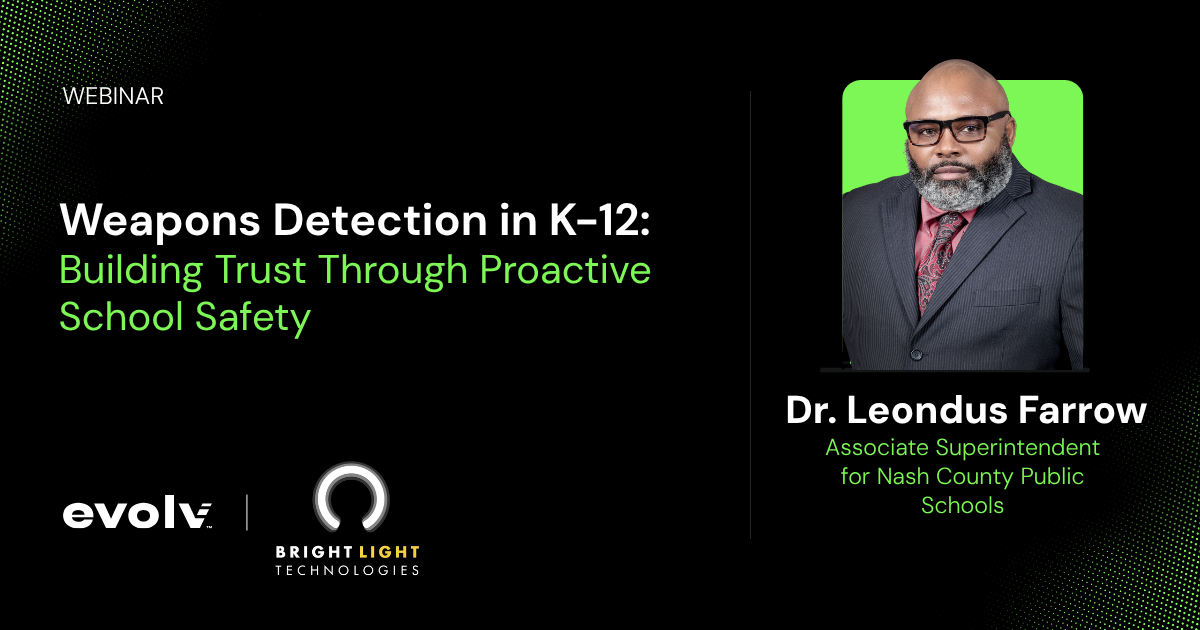
- Nash County Public Schools implemented weapons detection as a preventative layer across multiple schools
- The focus was on stopping potential incidents before they escalate while preserving normal campus operations
Clear Communication Builds Trust
Strong safety programs pair technology with transparency.
- District leaders proactively explained safety decisions to staff, families, and the broader community
- New measures were thoughtfully integrated with existing safety protocols
- Open communication helped build confidence and shared understanding
People Remain Central to Safety
Nash County’s experience reinforces a key takeaway shared by school leaders nationwide:
- Safety technology supports people rather than replace them
- When prevention, communication, and staff engagement work together, schools can strengthen security while maintaining a welcoming environment

VP of Education
Jill Lemond is a proud leader on the Evolv Technology team. In the wake of a tragic school shooting in Michigan, Jill realized she wanted to impact change on a broader scale. Lemond joined Evolv because of their clear mission to keep weapons out of our schools. She now serves as Evolv Technology’s Head of Education. She has more than 15 years of experience in education, having served over twelve years at Oxford Schools. Previous positions include ESL and International Programs Coordinator, Director of International Operations, and Assistant Superintendent of Safety & School Operations. Jill has extensive school safety training and certifications and holds a Bachelor of Arts in English/Language Arts Teacher Education and TESOL from Michigan State University, as well as an MBA from Capella University. She is an active member of the Bureau Consortium and an advisory council member of ZeroNow. Jill is dedicated to the mission of keeping our school communities safer. She strives to see the big picture while always returning the focus to students and learning. To best serve students, safety planning must be comprehensive and prioritize both physical security and emotional well-being. All stakeholders must be involved in the planning, training, and implementation of school security efforts. Emergency preparedness is truly a matter of life and death and our families and staff deserve safe schools.


