
Questions We Avoid Asking Around Gun Violence Awareness

When people talk about preventing gun violence, the conversation can feel overwhelming. It often turns into a debate about policy, systems, or things that feel far outside of everyday control.
But some of the most practical steps happen much closer to home, in small, everyday interactions that don’t feel like “solutions,” but still play a role.
There’s a moment almost every parent knows.
Your child is heading to a friend’s house, and you run through the usual checklist:
- Who’s going to be there?
- What time will they be home?
- What will they eat there?
These questions feel automatic because we’ve practiced them. They’ve become part of how we define responsible parenting.
What safety question is often left unasked?
There’s another category of safety conversations that rarely makes that parent checklist: firearm safety. In fact, even medical and education professionals often leave this topic unaddressed, likely to avoid conflict.
And in many cases, it’s as simple as asking how firearms are handled in the home.
- Parents hesitate because they don’t know the “right” way to ask.
- Educators hold back because they’re unsure how to address the topic with families.
- Even healthcare professionals can feel uncomfortable raising it, especially if it falls outside their core training.
What can starting the conversation actually sound like?
In practice, that might sound like: “We’ve started asking a few more safety questions before playdates would you mind sharing how firearms are stored in your home?” It’s not technical. It’s not confrontational. It’s just a question rooted in care.
What matters most is creating an opening.
What happens once the conversation begins?
Once that opening exists, the conversation doesn’t have to go perfectly. It can be a little awkward. It can be brief.
The first time asking may feel uncomfortable. The second time, slightly easier. Eventually, it starts to feel normal, just another part of looking out for your child. That’s how other safety behaviors evolved. No one was an expert in car seats or bike helmets at the beginning. The norm changed because people kept talking about it anyway.
When one person starts the conversation, it gives others permission to do the same.
How is Evolv Continuing the Conversation Around Gun Violence Awareness?
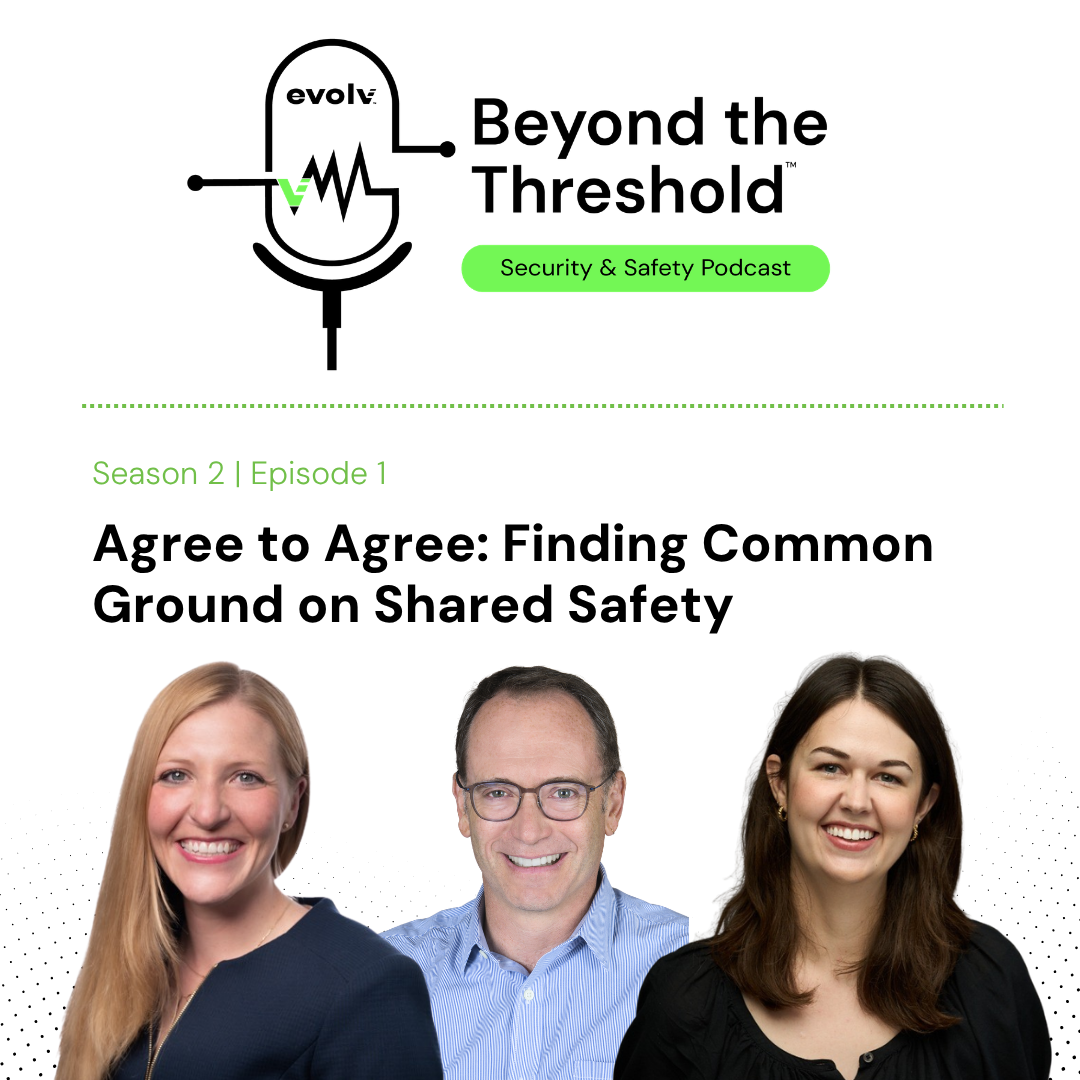
In partnership with the Ad Council, we brought together leaders across healthcare, education, and public awareness to unpack why these conversations feel so difficult, and how small, practical moments like this one can make them easier to start.
If you want to hear how different perspectives come together around this idea, watch the full discussion.

VP of Education
Jill Lemond is a proud leader on the Evolv Technology team. In the wake of a tragic school shooting in Michigan, Jill realized she wanted to impact change on a broader scale. Lemond joined Evolv because of their clear mission to keep weapons out of our schools. She now serves as Evolv Technology’s Head of Education. She has more than 15 years of experience in education, having served over twelve years at Oxford Schools. Previous positions include ESL and International Programs Coordinator, Director of International Operations, and Assistant Superintendent of Safety & School Operations. Jill has extensive school safety training and certifications and holds a Bachelor of Arts in English/Language Arts Teacher Education and TESOL from Michigan State University, as well as an MBA from Capella University. She is an active member of the Bureau Consortium and an advisory council member of ZeroNow. Jill is dedicated to the mission of keeping our school communities safer. She strives to see the big picture while always returning the focus to students and learning. To best serve students, safety planning must be comprehensive and prioritize both physical security and emotional well-being. All stakeholders must be involved in the planning, training, and implementation of school security efforts. Emergency preparedness is truly a matter of life and death and our families and staff deserve safe schools.


