Types of Weapons Detection Solutions

Audible Weapons Detection
This technology, also referred to as gunshot detection, identifies gunshots through audible analysis. Using strategically placed sensors, these systems listen for sounds that match the unique signature of a firearm discharge.

Visual Gun Detection
Also known as brandished firearm detection, this technology uses video cameras and software to recognize when a gun is visibly drawn and send alerts in real time.

Walk Through
Concealed Weapons Detection
Focuses on finding weapons hidden on people while allowing them to walk through with many common everyday items, supporting both detection and efficient entry.

X-Ray Bag Scanning
Concealed Weapons Detection
Focuses on finding weapons hidden in a bags. Bags are placed on a conveyor belt for screening, often next to a walk-through system, creating a fast and efficient drop-and-go process.
Variance in Concealed Weapons Detection Technologies
Weapons detection technologies can vary. Some rely on metal detection, others use radar or millimeter‑wave sensors, and some involve X‑ray screening for bags. AI algorithms have been built into some of these technologies to distinguish between potential threats and everyday items. Every approach has different strengths and limitations depending on the environment and security goals.
Security leaders consult with vendors to ultimately decide on how each system may or may not work within a specific operational environment: how a solution operates, where systems are placed, how visitors move through entrances, and what happens after an alert occurs. These decisions should be planned carefully to fit the venue size, layout, and routines.
For a full breakdown of the different weapons detection technologies, and what each is designed to detect, how they’re operated, download our whitepaper.

What Kind of Weapons Are We Talking About?
When people think about weapons detection, they often think about stopping a mass shooting. But in school environments, for example, weapon related incidents often involve an escalation where a student already had access to a firearm. In these cases, the weapons involved are far more often handguns than large rifles. What may have been a fist fight, now involves a gun. These guns are often small, easy to conceal, and commonly owned handguns. Knives are another concern for schools and other public spaces.
How a weapon is detected depends on both the technology being used and what the weapon is made of. Knives present a different challenge, since they vary widely in size, shape, and composition. Understanding these differences is important when evaluating what a system is designed to detect, and what it is not.

Potential Benefits of Advanced Weapons Detection Systems
Advanced weapons detection systems are designed to help venues improve their security posture while supporting an efficient and welcoming experience for visitors and staff.

Screen People Quickly
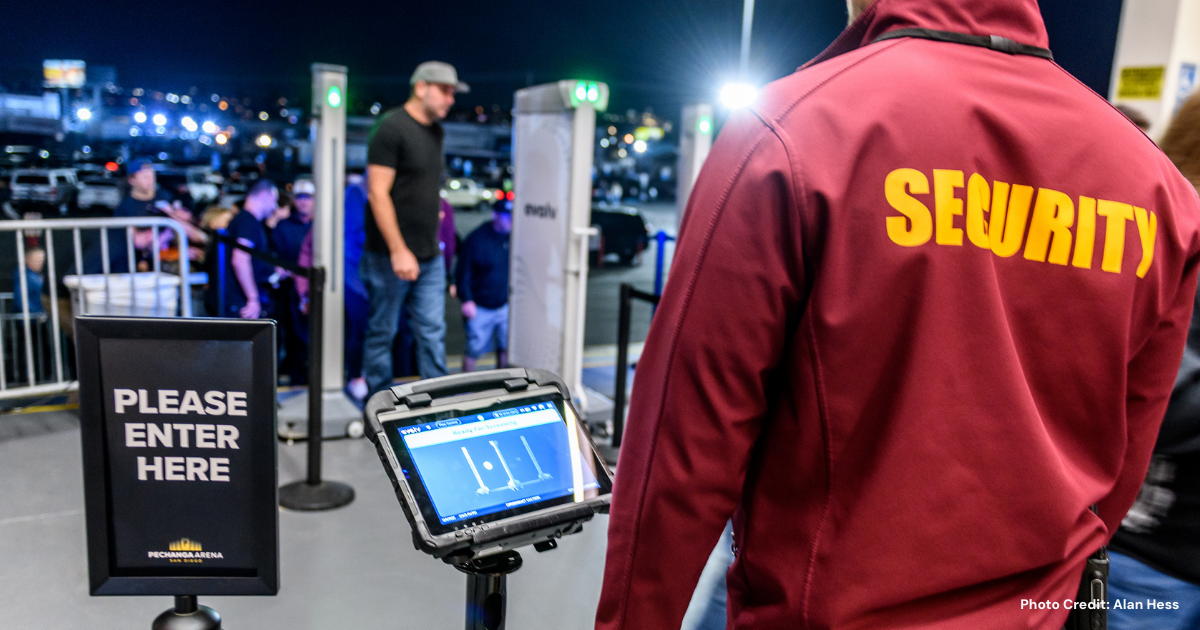
While speed depends on system settings and what people are carrying, the goal is to keep people moving and only require stops or additional screening when a potential threat is identified.
Detect Weapons Reliably
Security staff are ultimately responsible for preventing weapons from entering. Detection technology can assist them in finding weapons and telling them where they might be located on people entering.
Walk-Through Weapons Detection Comparison Testing
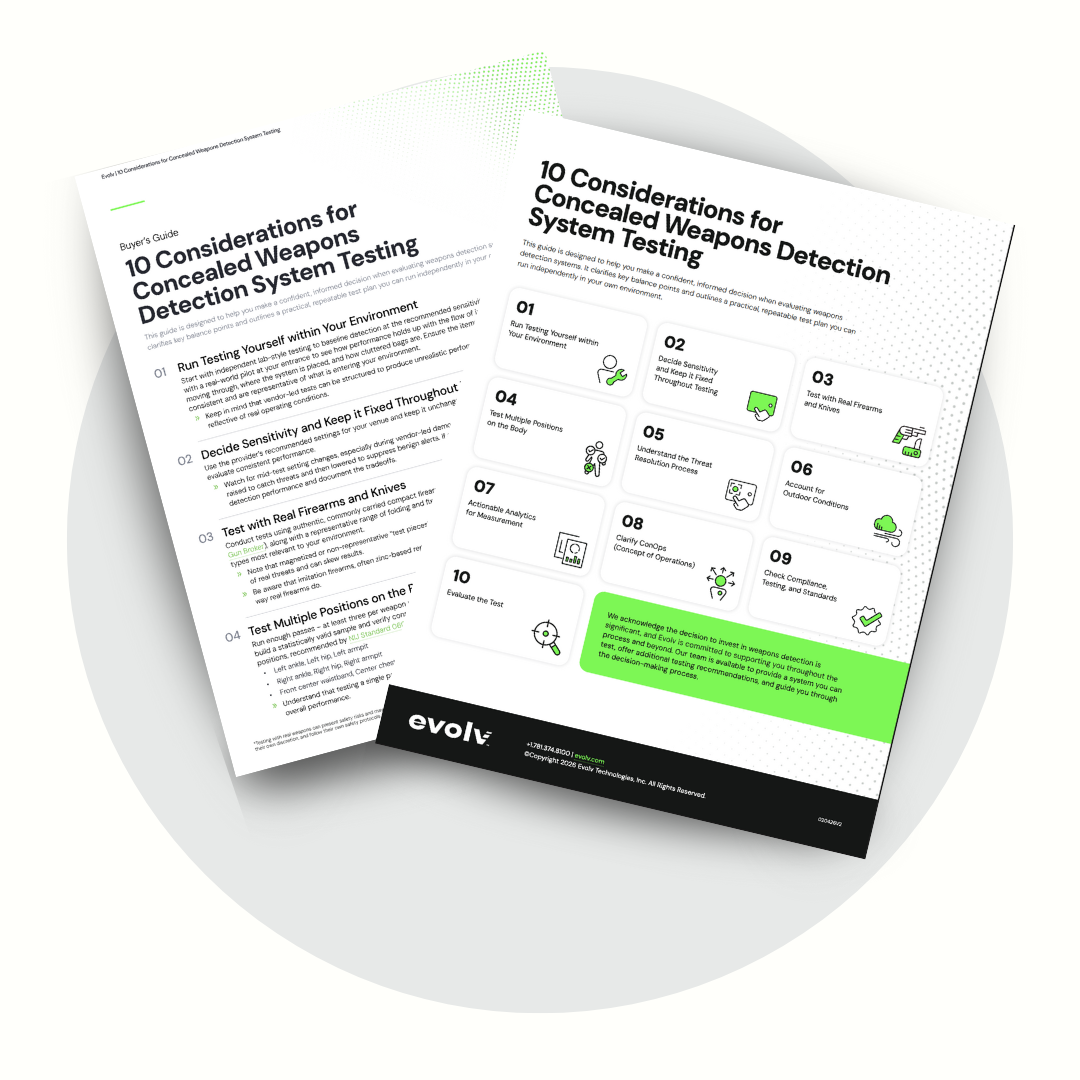
When assessing weapons detection systems, conducting independent testing is a recommended step to understanding detection performance, alert rates, and how to address alert resolution. The following considerations provide a comprehensive foundation for potential ways you can conduct fair comparative testing between systems.
X-Ray Bag Scanning Weapons Detection Comparison Testing
A layered security approach, combining walk-through weapons detection and X-ray bag scanners, can benefit venues like schools, hospitals, stadiums, and amusement parks, especially in cluttered environments. To address efficiency and operational concerns, it’s crucial to choose systems designed for ease of use.
Download our Buyer’s Guide and Infographic to help you make your decision.